
CUI Jiyang
- Position
- Chinese Instructor

1. Hometown in China
I am from Linyi, in Shandong Province. Linyi is a city that blends modern high-rise buildings with natural beauty and is the hometown of the great calligraphers Wang Xizhi and Yan Zhenqing. It is famous for the Yimeng Mountains, which are home to Shandong's second-highest peak and offer spectacular natural scenery.
Linyi also boasts a rich cultural heritage and has produced many distinguished historical figures.

2. Favourite Food
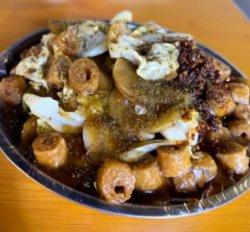
My favourite food is spicy skewers, a local speciality of my hometown. They are made by rolling dried tofu skin into rolls, cutting it into pieces, threading it onto skewers and deep-frying it.
You can add a variety of seasonings and chilli to suit your own taste, making it a fun and interactive dining experience. The flavour is so memorable that I always make sure to have some whenever I return to my hometown.
3. What are your hobbies?
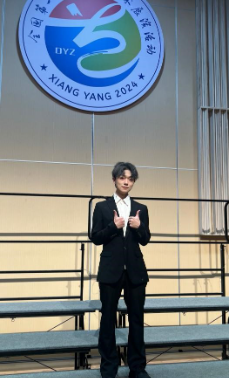
I love singing. I have studied bel canto, Chinese folk music and traditional Chinese opera, and I enjoy blending different vocal styles when singing pop songs.
I also enjoy sports, particularly table tennis and badminton. Although I am not especially skilled, I am always happy to keep learning and improving through practice.
4. What is your favourite thing about teaching Chinese?
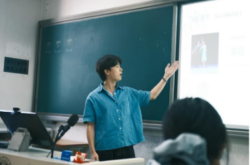
To me, teaching Chinese is far more than simply teaching a language. It provides a valuable opportunity for mutual learning and cultural exchange.
I really enjoy sharing interesting aspects of both traditional and modern Chinese culture with my students. At the same time, I love learning about my students’ countries, cultures and personal experiences.
I believe these cross-cultural connections are truly special.
5. What is your top tip for beginner learners of Chinese?
Don’t be afraid to make mistakes.
Drawing on my own experience of learning English, I believe language learners need to stay confident and be willing to speak up. For beginners, every mistake is a valuable opportunity to learn and improve.
6. What is your top tip for more advanced learners of Chinese?
For learners with a solid foundation in Chinese, the best way to continue improving is to make the language part of your everyday life.
You can watch Chinese television dramas, listen to Chinese music and read Chinese books, but it is important to choose materials that are appropriate for your level.
I believe that, despite our different backgrounds, we all share common emotions and can connect through similar experiences. For this reason, I encourage learners to explore the wider Chinese-speaking world beyond their textbooks.
7. Favourite Chinese Saying or Chengyu
One of my favourite Chinese sayings is:
三人行,必有我师焉
(Sān rén xíng, bì yǒu wǒ shī yān)
“When walking with two other people, there is always something I can learn from them.”
This famous saying comes from The Analects of Confucius. It reminds us that everyone has strengths and knowledge from which we can learn.
This belief guides my teaching. For me, teaching Chinese is a process of mutual cultural exchange rather than one-sided instruction. I share Chinese culture and stories with my students, and in return I learn about their cultures, perspectives and life experiences.
This saying encourages me to remain humble, open-minded and committed to lifelong learning. I also hope my students will embrace this idea as they continue learning Chinese.

8. What Chinese TV show would you recommend to students?
Everlasting Classics is my recommendation.
This popular cultural television programme transforms ancient Chinese poetry into beautiful musical performances, combining classical literature with modern music. It brings traditional poems to life in an engaging and accessible way.
Students can learn poetic language, appreciate the rhythm and beauty of Chinese, and gain a deeper understanding of Chinese history and culture through these performances. It is an excellent choice for learners at a wide range of proficiency levels.
